
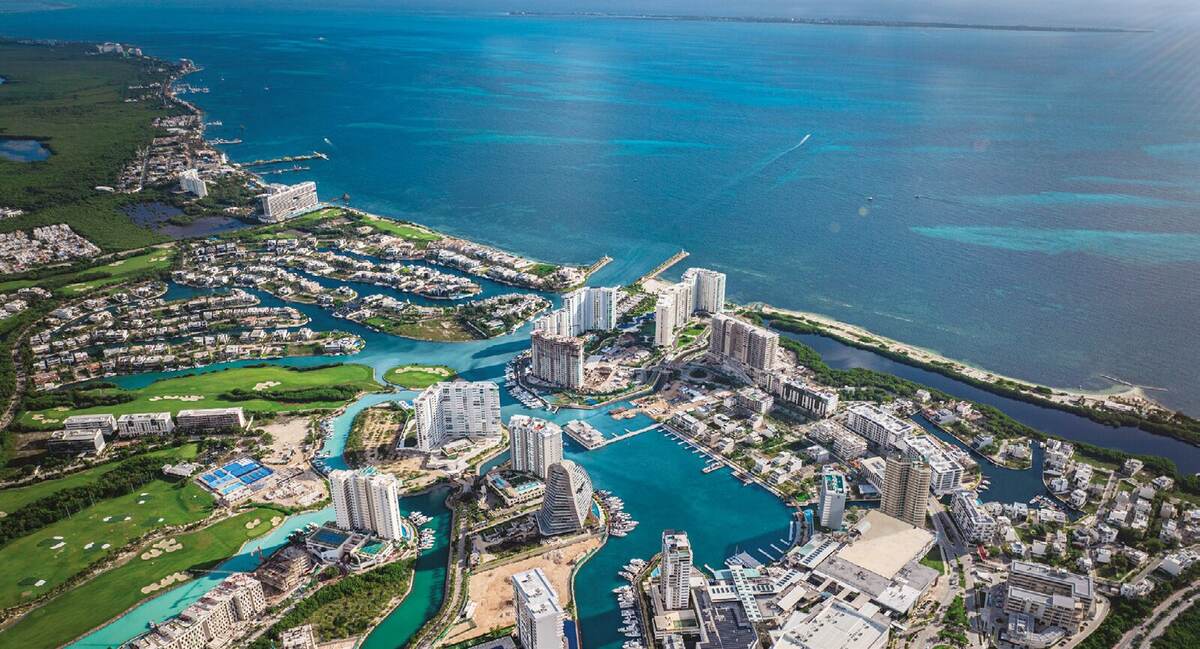
If you are from the United States, Canada or Europe and thinking about buying in Cancún, sooner or later you will hear the word fideicomiso. It sounds like a complicated procedure, but in practice it is the standard mechanism thousands of foreigners use to buy on the Mexican coast, Puerto Cancún included. Here is what it is, why it exists, how it is set up, what rights you have and what happens if you want to sell or pass the property on.
Cancún sits inside Mexico's restricted zone (within 50 km of the coast), where a foreigner cannot hold direct title. A Mexican bank acts as trustee and you are the beneficiary: you can use, rent, sell and bequeath the property. The term is 50 years, renewable. Your notary and the bank handle the paperwork.
The Mexican Constitution prohibits foreigners from holding direct ownership of land in the so-called restricted zone: 50 km inland from any coastline and 100 km from the borders. Cancún and the entire Riviera Maya fall inside it. To allow foreign investment there, the law provides for the bank trust (fideicomiso): an authorized Mexican bank holds legal title to the property inside the trust, and you, as the beneficiary, keep all rights of use and enjoyment.
Two useful clarifications. First, Mexican citizens do not need a fideicomiso. Second, it is not a lease or a concession: it is a recognized legal structure that backs your investment, and it is the route used by Puerto Cancún developments with international buyers.
Timing depends on the notary and the bank; ask for an estimated schedule before you sign. If you buy pre-construction, the trust is normally created at closing (escrituración), when the project is delivered. Your pre-sale purchase contract does protect you from the start, so review it with your advisor (see why buy pre-construction in Cancún).
There are two costs: a one-time cost to set it up (the SRE permit, the bank's fees and related notary expenses) and an annual fee the bank charges to maintain the trust. Amounts vary by bank, notary and timing, and published sources show very different ranges, so do not rely on a single figure. In our guide to taxes and closing costs when buying in Cancún we use reference ranges (US$1,500 to US$3,500 or more to set it up, and US$500 to US$900 per year). Ask your notary and the bank for a written quote before signing.
You can sell whenever you want. If the buyer is Mexican, the property leaves the trust and is deeded directly. If the buyer is a foreigner, the beneficiary is normally substituted within the same trust, or a new trust is created, with the notary's involvement. If you later acquire Mexican nationality, you can request that the trust be terminated so you hold direct title.
That is why it matters to name substitute beneficiaries when the trust is created (or to amend it later). If they are named, the property passes to them as provided; if not, the process can be longer and costlier. It is one of the things most worth settling on day one, along with a will in Mexico or in your country of residence, depending on your situation.
The trust has an initial term of 50 years, renewable. Renewal requires a new filing, so if your horizon spans several decades, keep the date in mind. The exact terms are in your deed and your notary will confirm them.
This guide is informational and is not legal or tax advice. Laws, procedures and amounts change; always confirm with your notary and attorney before deciding.
If you are evaluating Puerto Cancún, see the 2026 prices per sqm and our checklist on how to choose a real estate agency in Cancún, or leave us your details.
Tell us about your case and we will walk you through the process, timing and reference costs, no obligation.
Talk to an advisor